
Why Kids Should Help in the Kitchen: Surprising Benefits That Go Beyond Cooking
Some of my best childhood memories are from my grandma’s kitchen.
She taught me how to wash mussels, fry fish, and bake every kind of cake you can imagine. I’d pull veggies straight from her little garden, stand on an old tree stump, and narrate my “cooking show” to an imaginary audience, years before YouTube was even a thing.
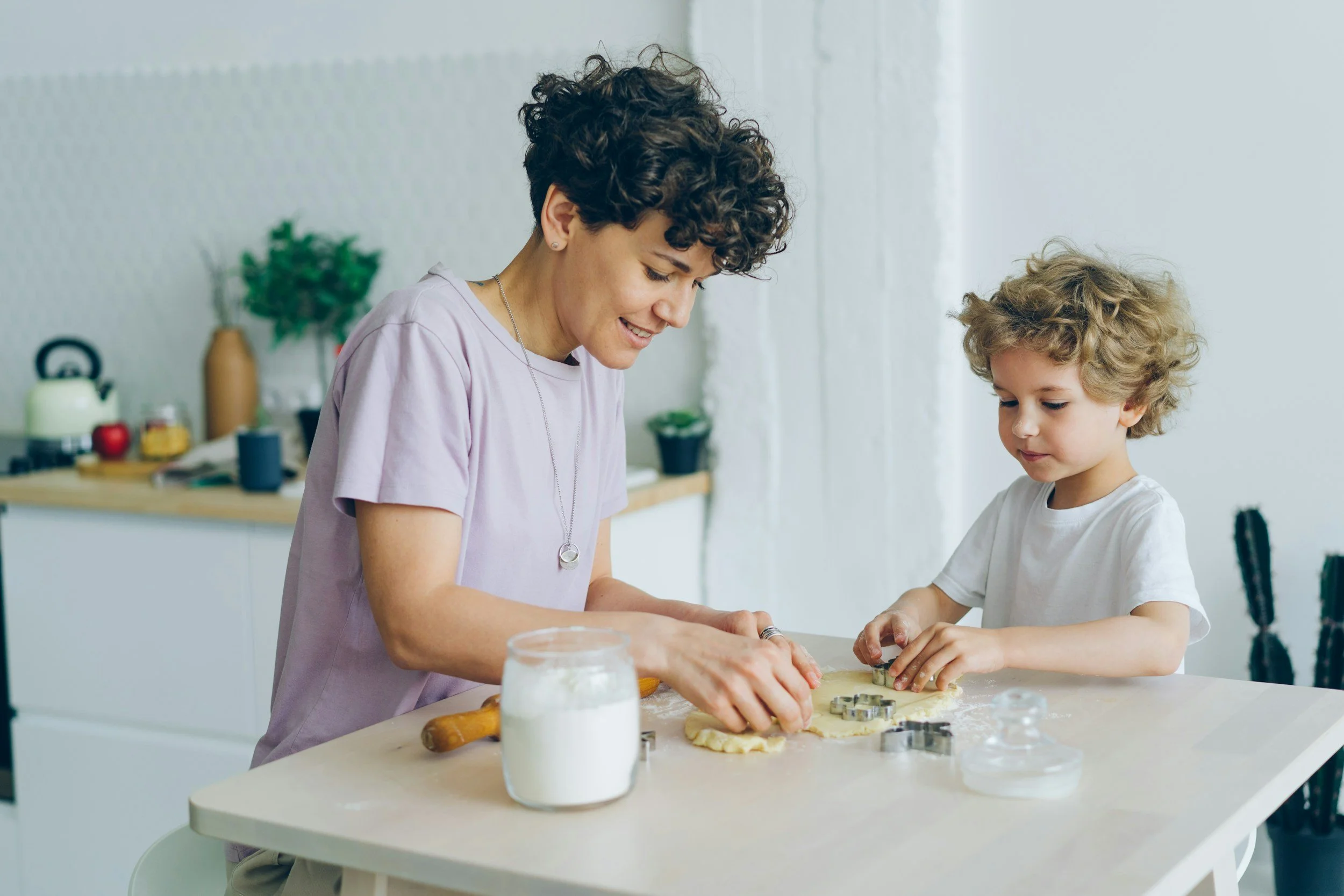
Make memories
The bonus being that children who help in the kitchen are more likely going to try new foods and be less picky
Then came the moment of truth: my grandad’s taste test. He’d take a bite, pause dramatically, and then give a nod of approval that made me feel ten feet tall. Those moments didn’t just teach me how to cook, they taught me patience, pride, and the joy of creating something that brings people together.
Now, when I encourage parents to let their kids help in the kitchen, it’s not just about food. It’s about connection, confidence, and shared memories. The kind that last far longer than any cake crumbs or sticky fingers.
Here are three practical reasons to invite your little ones to join you in the kitchen (even if it means a bit of extra clean-up).
1. Cooking Builds Confidence and Independence
From a toddler’s first time stirring pancake batter to a preschooler measuring out ingredients, the kitchen is full of achievable wins. When children help prepare food, they see a direct result of their effort. “I made that!” Which boosts their self-esteem and sense of capability.
It’s not just cooking; it’s teaching responsibility and teamwork. And yes, kids who help are way more likely to try what they’ve made, even if it’s green and slightly mushy. It’s a WIN WIN.
2. It’s a Built-In Learning Opportunity
Cooking naturally teaches math, science, and language, no worksheets required. Counting strawberries, measuring flour, observing how heat changes ingredients, these are early STEM lessons in disguise.
You’re also building fine motor skills, following directions, and giving them a sense of rhythm and routine. Every time they pour, stir, or chop (safely, of course), they’re learning persistence and patience skills that spill over into every part of life.
3. Cooking Together Encourages Healthier Eating Habits
Children who help in the kitchen are more likely to try new foods, eat more vegetables, and develop healthier attitudes toward food. When they’ve helped wash the carrots or stir the soup, they feel ownership and that makes a difference.
If your child turns their nose up at broccoli, let them be the one to drizzle the olive oil or sprinkle the salt ( small amounts please ) before roasting. Sometimes all it takes is a little “buy-in” to turn a picky eater into a proud taste tester.
Final Thought
When I look back, I don’t remember the messes or the burnt edges, I remember my grandma’s smile, the smell of frying fish and the thrill of seeing my grandad’s approving nod.
That’s what kitchen memories are really about.
It’s not perfection it’s presence. It’s the laughter, the learning, and the little moments that become part of who we are, I still love cooking and baking to this day! I love being in the kitchen, it’s my absolute safe haven and I love to have my kids with me. sitting at the island, chatting whilst I whip up dinner or dessert.
So yes, let your kids crack the eggs, stir the batter, and pull up a stool. You might just be giving them the same kind of core memories that last a lifetime.
If you love these kinds of practical, heart-centered parenting insights, sign up for my newsletter for weekly tips, real stories, and support for confident, connected parenting.