
If you’ve ever found yourself squinting under a bright bathroom bulb or fumbling with your phone torch at 2 a.m. while changing your baby’s nappy, you’re not alone. Nighttime parenting is its own special kind of tired, but lighting can make a surprising difference to how well your baby (and you) fall back asleep.
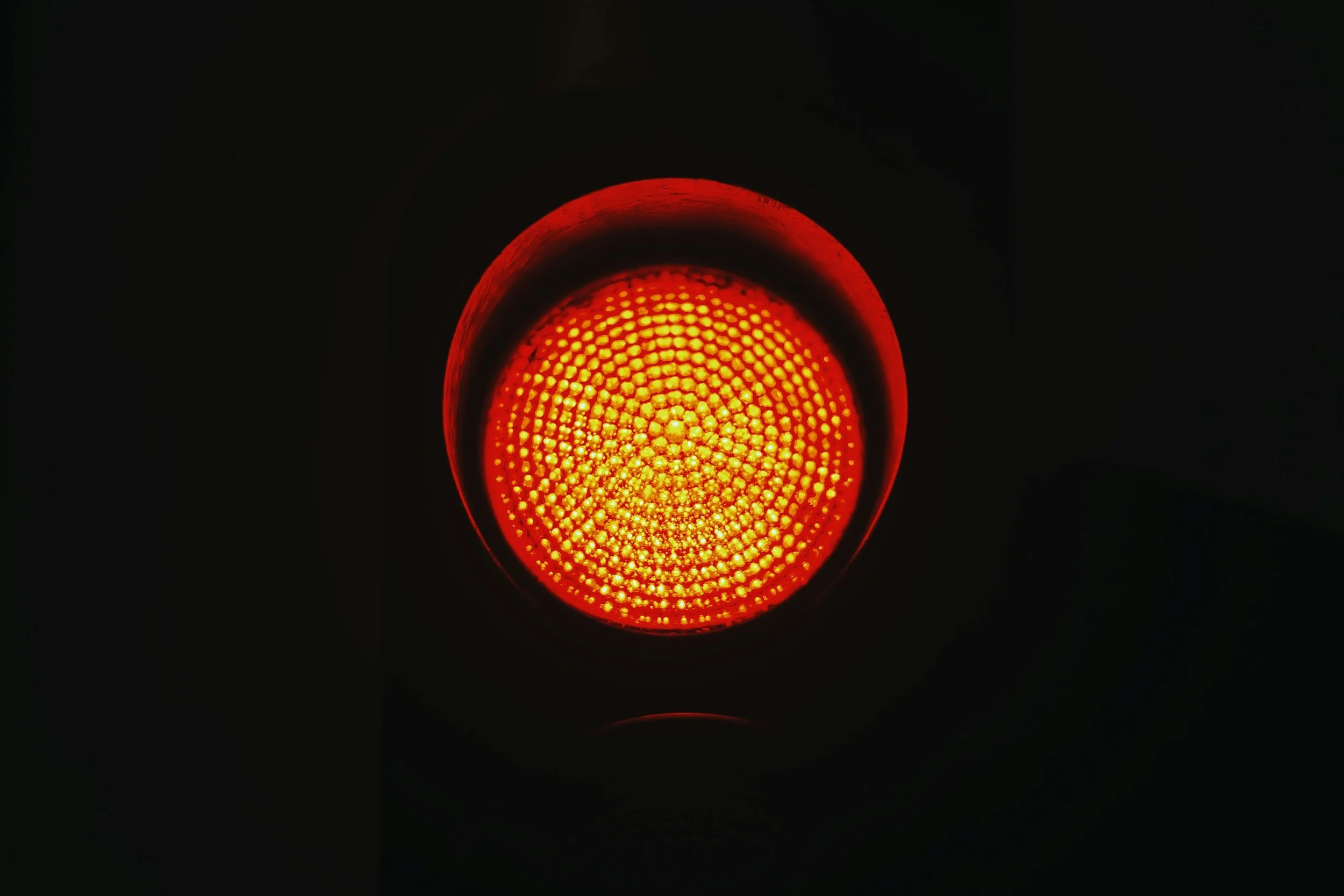
Recent studies have shown that Red Light is less likely to interfere with melatonin production.
Enter: the humble red light.
Why Light Matters at Night
Our bodies are governed by something called the circadian rhythm; an internal clock that tells us when to be awake and when to sleep. This rhythm is heavily influenced by light, especially blue light, which is abundant in daylight and in most LED bulbs.
Research shows that exposure to blue or white light at night suppresses melatonin, the hormone that helps us fall asleep (Harvard Health Publishing, 2020). That means switching on a bright overhead light during a 2 a.m. feed tells your brain (and your baby’s) that it’s morning and good luck getting everyone back to sleep after that! This is even worse at 5am when the drive to sleep is very weak.
The Science Behind Red Light
Red light has a longer wavelength and is less likely to interfere with melatonin production. Several studies suggest red or amber light supports sleep by allowing you to see what you’re doing without waking your body up (Cho et al., 2015; Figueiro et al., 2019).
In other words, it gives you just enough visibility for safe feeding or nappy changes, but keeps your brain in “night mode.”
How Bright Should It Be?
For nighttime feeds or changes, dim is best. You want a red light that provides just enough illumination to see your baby safely around 5 to 15 lux (a soft glow similar to a nightlight).
A few practical tips:
Choose a dedicated red nightlight or bulb that’s dimmable.
Avoid using your phone light, it emits strong blue light, even in “night mode.”
Keep the light low to the ground or facing away from your baby’s eyes. You don’t want it to cast light directly onto the crib.
Avoid any flashing, changing, or multicolor lights.
It Helps You Too
Studies show that exposure to red light at night can actually support melatonin production and improve sleep quality in adults (Zhao et al., 2012). So if you’re the parent doing the feeds, a red light might mean you fall back asleep faster, too.
A small shift in your nighttime setup swapping bright overheads for a warm red glow can mean fewer wakeups, faster settle times, and better rest for everyone. It’s one of those tiny tweaks that can make the long nights just a little easier.
Looking to make night feeds smoother and sleep more restful?
Join my newsletter for monthly parenting tips, thoughts and keep your updated on the latest blog post and offerings
References
Harvard Health Publishing (2020). Blue light has a dark side. Harvard Medical School.
Cho, J.R. et al. (2015). Effects of light wavelength on melatonin and sleep in humans. Chronobiology International.
Figueiro, M.G. et al. (2019). Red light at night and its impact on sleep quality. Journal of Sleep Research.
Zhao, J. et al. (2012). The effects of red light therapy on sleep quality and melatonin levels. Sleep Medicine.